Ask a stylist who left a traditional salon what pushed them out the door, and the answer rarely starts with money. It usually starts with a schedule that was not theirs, a commission split that never quite reflected their skill, or a manager who decided which clients they would see and when. Money matters, but freedom is the word that keeps coming up, and it is the reason studio rentals have gone from a niche alternative to one of the fastest-growing ways beauty professionals work in the United States.
This piece looks at what that freedom actually consists of, why so many stylists are chasing it right now, and what it takes to make the leap successfully.
The Traditional Salon Model Was Never Built Around the Stylist
Commission-based salons were designed around a simple trade: the owner takes on the overhead, the marketing, and the front desk, and the stylist gives up a percentage of every service in exchange. For a new stylist fresh out of cosmetology school, that trade can make sense, since the owner absorbs the risk while the stylist learns the trade and builds a book of clients.
The problem shows up years later, once a stylist has built a loyal clientele and realizes the split has not changed even though their skill, speed, and demand have. A stylist who books solid weeks and turns away new clients is still handing over the same percentage they handed over as a beginner. Add to that a schedule set by someone else, a color line chosen by someone else, and a front desk that occasionally overbooks a chair to keep the floor busy, and it becomes clear why so many experienced stylists start looking elsewhere. The Professional Beauty Association, the largest trade group representing the beauty industry, has documented this exact pattern for years: as stylists gain experience and a client base, independence becomes more financially attractive, not less.
What Studio Rental Actually Changes
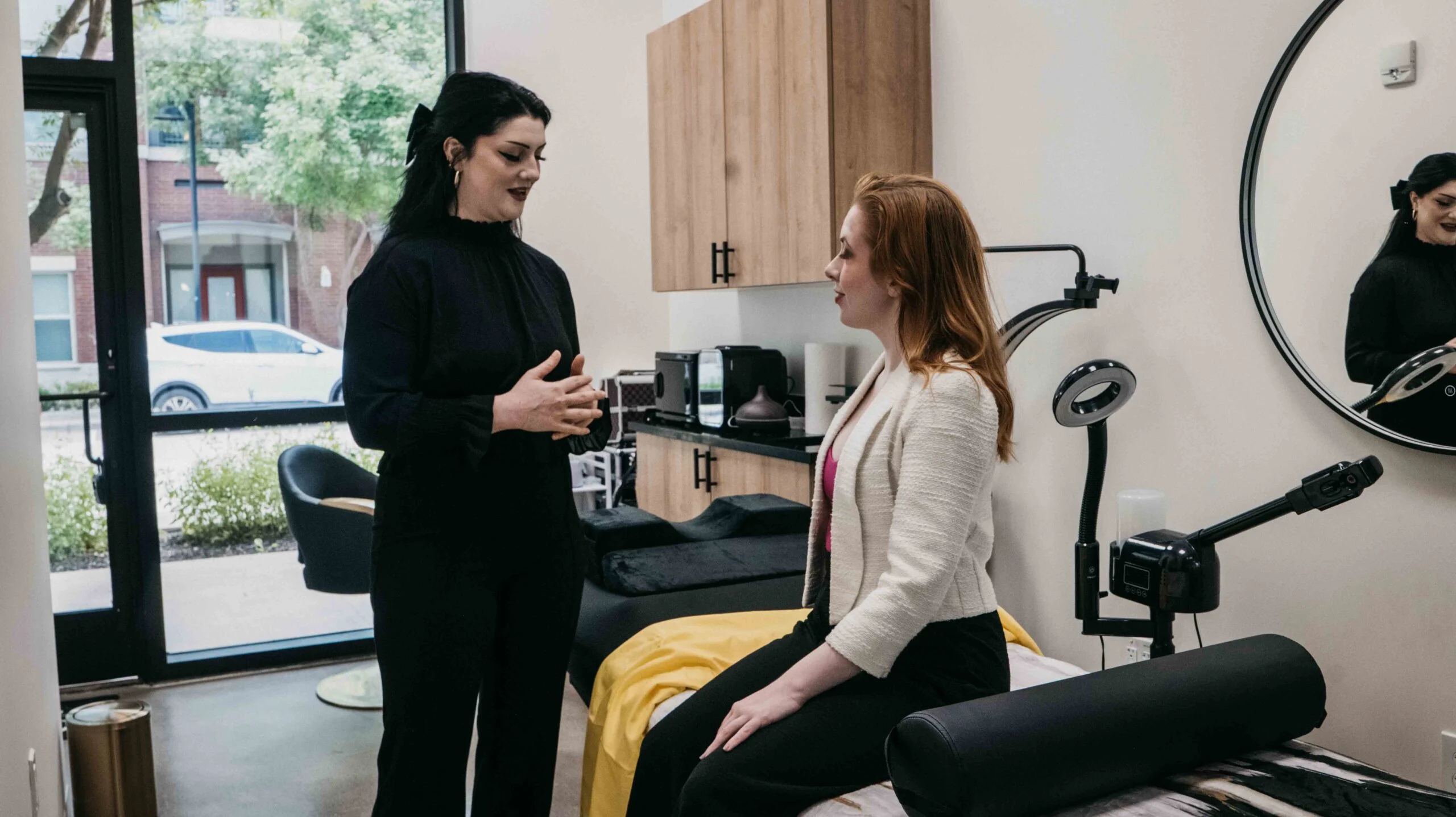
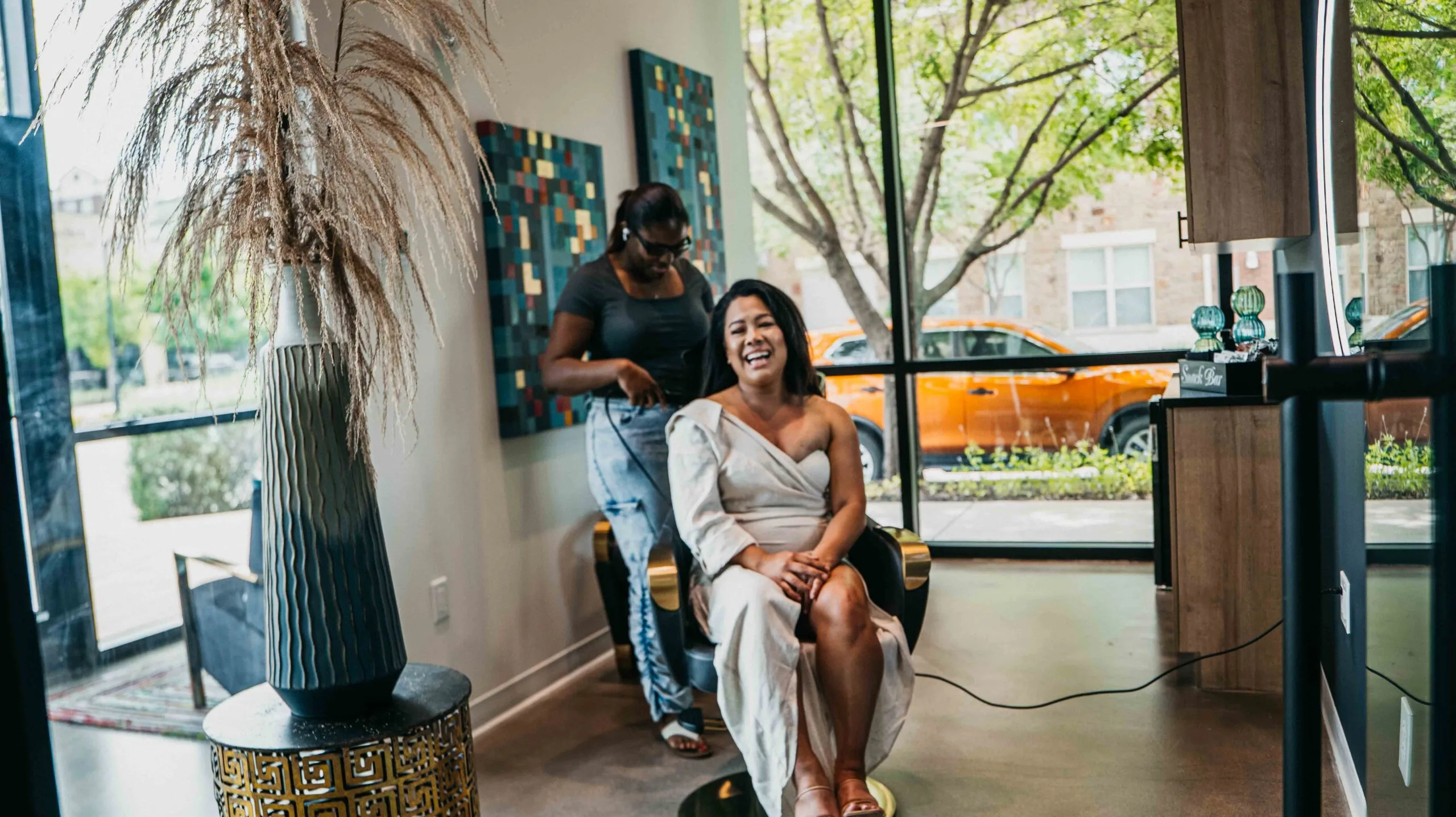
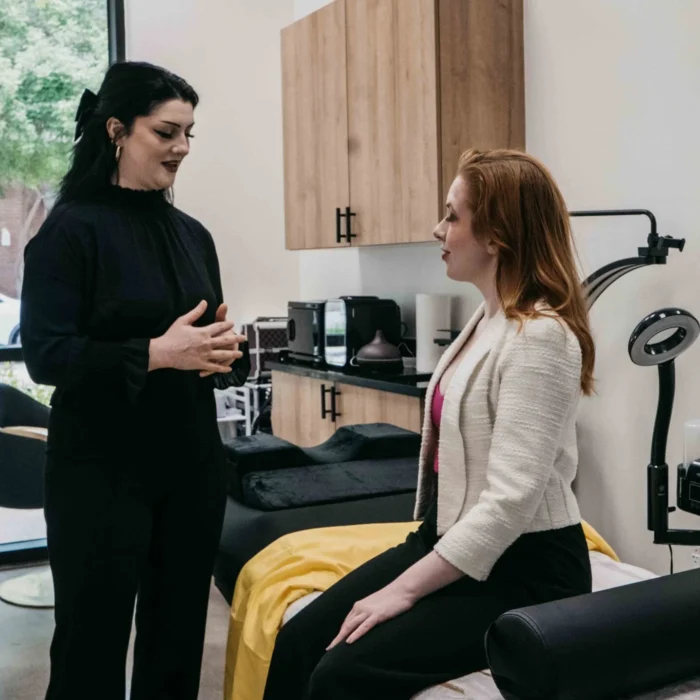
A private studio rental flips the arrangement entirely. Instead of giving up a percentage of every service, a stylist pays a fixed rent for a private, fully furnished space and keeps everything they earn beyond that. At Treazure Studios, that space is not a shared station on an open floor. It is an enclosed, lockable suite designed for one professional to run their business exactly the way they want, from the retail on the shelf to the playlist in the background.
That single change has ripple effects most people underestimate until they experience it. A stylist decides their own hours instead of working around a salon’s posted schedule, which matters enormously for parents, for stylists managing a second job, or for anyone who simply works better later in the day. A stylist decides their own prices without a manager weighing in, which means a stylist who wants to raise rates after mastering a specialty like balayage or extensions can actually do it. And a stylist decides who walks through the door, since there is no front desk booking walk-ins into an empty chair without asking first.
Freedom From Salon Politics
Ask any stylist who has worked in a shared salon floor for more than a year, and they will likely mention the politics before they mention the money. Shared break rooms, competing personalities, and a manager who has to referee disputes between independent contractors sharing one roof create friction that has nothing to do with the actual craft of styling hair. A private suite removes that friction almost entirely, since there is no shared floor to navigate and no manager mediating disagreements between renters who technically do not answer to each other in the first place. Treazure Studios describes this directly on its benefits page, where the phrase used is running a business without the usual salon drama, a detail that resonates with stylists who have lived through it.
This is not a small consideration. A stylist’s mood and focus during a service affect the client sitting in the chair, and a stressful work environment eventually shows up in the quality of the work itself, even for the most professional stylist. Removing that daily friction is part of why so many stylists describe suite rental as feeling less like a job change and more like a weight coming off.
Freedom to Build an Actual Brand
In a traditional salon, a stylist’s personal brand is often tangled up with the salon’s brand whether they like it or not. Clients remember the salon name as much as the stylist’s name, and if that stylist ever leaves, rebuilding recognition under their own name from scratch is one of the hardest parts of going independent. A private studio removes that tangle from day one. The space carries the stylist’s name, their aesthetic, and their voice, which means every client interaction reinforces the stylist’s own brand rather than someone else’s.
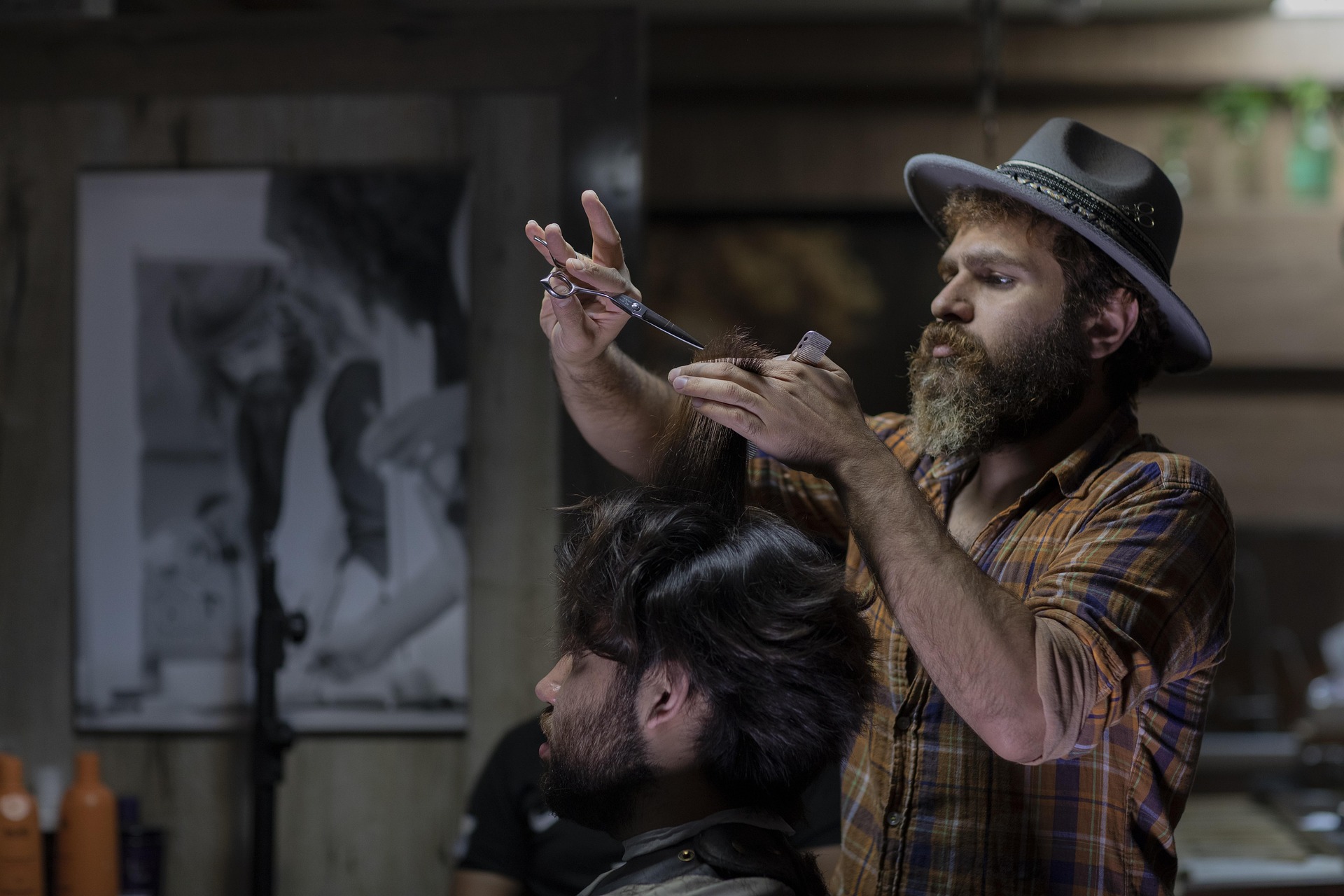
Treazure Studios leans into this by letting tenants fully personalize their suites, down to the paint and the decor, and by offering categories built for specific specialties, whether that is hair styling or barbering. A stylist who spends years building a following under their own name, in a space that looks and feels like their own name, has something a commission-based employee rarely gets to build: a brand that is entirely portable and entirely theirs.
Freedom the Client Feels Too
Stylists sometimes assume the appeal of a private suite is purely internal, a lifestyle upgrade that only they will notice. In practice, clients feel the difference immediately, and that reaction often becomes one of the strongest reasons a stylist sticks with the decision. A private, soundproof room means a color consultation or a difficult conversation about hair loss happens without anyone else in earshot. It means a client waiting for a treatment to process is not sitting under someone else’s blow dryer or listening to someone else’s phone call. Clients who are used to the energy of a busy salon floor sometimes need a visit or two to adjust, but most describe the private setting as feeling more personal, more attentive, and, frankly, more expensive in a good way, even when the price has not changed.
That perception matters for retention. A client who feels like they are getting a bespoke experience is less likely to shop around for a better deal elsewhere, since the relationship starts to feel less like a transaction and more like access to something exclusive. Stylists who have made the switch often report that referrals increase once their space reflects their brand rather than a generic salon interior, since clients enjoy describing a distinctive, private studio to friends far more than they enjoy describing a chair inside a strip-mall salon.
Freedom Does Not Mean Isolation
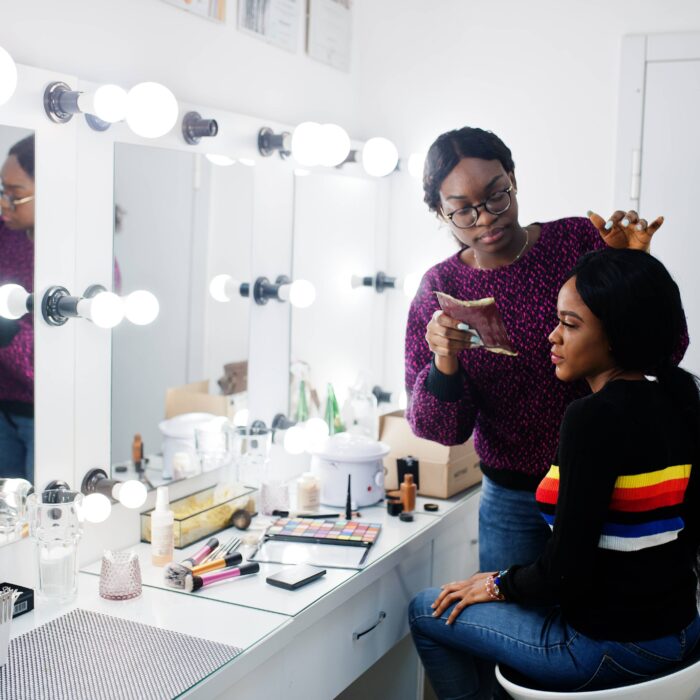
One hesitation stylists raise before making the switch is the fear of losing the camaraderie of a busy salon floor. Working alongside other stylists, even ones you are not especially close with, creates a kind of built-in social rhythm that some people worry about losing once they are behind a closed door all day. Studio brands that take this seriously build community into the structure rather than leaving tenants to figure it out alone. Treazure Studios organizes mixers and educational seminars specifically so tenants across different suites and different specialties, from hairstylists to estheticians to massage therapists, can build relationships with each other the way they might have on an old salon floor, just without the drama that came attached to it. The independence of a private suite and the camaraderie of a shared professional community are not mutually exclusive, even though it can feel that way from the outside looking in.
Freedom That Comes With Responsibility
None of this freedom is free of tradeoffs, and stylists considering the jump owe it to themselves to understand what changes on the paperwork side. Suite tenants are independent contractors, which means quarterly estimated taxes, self-employment tax, and bookkeeping become the tenant’s job rather than a payroll department’s. The IRS Self-Employed Individuals Tax Center is a solid starting point for understanding exactly what that responsibility involves before signing a lease.
The upside is that studio brands built around ownership tend to soften this learning curve rather than leave a new tenant to figure it out alone. Treazure Studios pairs its suites with bookkeeping and CPA support and a start-up guide covering licenses and permits, and its education arm, Treazure University, is built specifically to help tenants understand not just how to run a suite, but how to eventually turn the profits from that suite into real investments. That distinction, between simply working independently and being taught how to build wealth from that independence, is a big part of why the studio model has pulled ahead of plain booth rental for stylists thinking long term.
The Numbers Behind the Shift
This is not a fringe trend. The U.S. Bureau of Labor Statistics projects continued job growth for barbers, hairdressers, and cosmetologists over the next decade, and a large share of that workforce already works independently rather than drawing a salon paycheck. Trade coverage from Salon Today puts chair and suite rental combined at roughly a third of all salons nationwide, a figure that has climbed steadily as more stylists realize commission-based employment is optional rather than mandatory.
What is notable is how much of that growth is concentrated in the suite model specifically, rather than plain booth rental. Booth rental solves the commission problem but keeps the shared floor, the shared politics, and the shared unpredictability. Suite rental solves all three at once, which is likely why it has become the faster-growing half of that trend rather than an even split.
Freedom to Scale Beyond One Chair
For a smaller group of stylists, freedom eventually means something bigger than one suite. A stylist who has run a successful private studio for a few years sometimes starts asking a different question: could they open a location of their own, renting suites to other independent professionals the way they once rented one themselves. Treazure Studios has built a path for exactly that ambition through its franchise program, which turns the same ownership mindset the studio model teaches individual tenants into an option for opening an entire location. It is a natural extension of the philosophy laid out on the company’s about us page, where the stated goal is turning stylists into investors and business owners, not just independent contractors with a nicer room.
Is the Freedom Worth the Leap
Every stylist weighing this decision eventually has to answer one honest question: is the current salon holding them back, or is the salon simply the wrong excuse for a slow season that would happen anywhere. Stylists with a thin or inconsistent client base sometimes benefit from staying put a little longer while they build demand, since a private suite only pays off once there are enough bookings to cover the rent comfortably. Stylists with a loyal, steady clientele, on the other hand, are usually the ones who describe the switch as overdue rather than risky, because they were already doing the hard part, building trust with real clients, and simply were not being paid or treated in a way that matched it.
For stylists in that second category, the best next step is usually seeing an actual space rather than imagining one. Treazure Studios offers a scheduled tour at its current locations, including its flagship in Farmers Branch, Texas, so a stylist can walk through a real suite before deciding anything. Freedom is easy to talk about in the abstract. It is much easier to recognize the moment you are standing in a room that is entirely, finally, yours.